

Recent structural shifts in the media industry, including corporate downsizing, have led professionals to explore alternative avenues for content distribution. For communities monitoring specific legal and social issues, the evolution of how news is gathered and distributed remains a highly relevant topic. Understanding these operational transitions provides insight into the modern intersections of media, employment, and public policy.
By building grassroots platforms, media professionals are navigating the coverage gaps created by industry layoffs. During a recent episode of the Legal Lens podcast, I sat down with two prominent media figures to explore this transition objectively. CNN commentator and publisher of the Root Ashley Allison, alongside journalist and media strategist Jasmine Browley, shared their observations regarding the modern reporting landscape.
Throughout our conversation, both guests detailed their experiences transitioning from traditional newsrooms to emerging digital platforms. They discussed how decentralized reporting models operate in practice and shared their perspectives on the broader cultural implications of these changes, particularly regarding the role of Black voices in journalism.
Navigating the Episode: Time Stamps
00:00 – Introduction to the changing media landscape
01:21 – Ashley Allison discusses media acquisitions
03:24 – The legacy of WERD and grassroots storytelling
07:04 – The philosophy behind Watering Hole Media
11:00 – The “All Roads Lead to the South” march
15:19 – Utilizing creators for modern news dissemination
22:31 – Jasmine Browley on preserving culturally fluent media
28:03 – The operational transition to independent platforms
31:00 – The impact of the Louisiana v. Callais decision
34:42 – Confronting the complexities of media illiteracy
Introduction to the Changing Media Landscape
This episode of the Legal Lens podcast opened with an immediate look at the employment realities media professionals currently face. Jasmine Browley described a landscape where formal career trajectories are being rapidly altered due to corporate restructuring and mass layoffs. From an employment perspective, widespread workforce reductions often force individuals to transition from traditional employee roles to independent contractor status, fundamentally altering how they operate.
“So many Black journalists have been literally pushed out of newsrooms with mass layoffs. We already knew that the road was gonna be tough by choosing journalism. We didn’t know that it was gonna be almost impossible,” says Browley.
This disruption highlights why many professionals are moving toward independent journalism as a practical necessity. By establishing their own platforms, these professionals are attempting to rebuild their careers outside of the traditional corporate structure.
How Do Media Acquisitions Shape the Industry?
Ashley Allison, who recently took over as the publisher of the storied media entity The Root, shared her background working in law and policy for two presidential administrations before deciding to pursue her interests in the media sector. Corporate acquisitions of publications represent a significant business milestone, often leading to a shift in editorial direction or operational strategy.
“The reason why I bought The Root is because it was so influential in my career,” Allison explains.
When a media outlet changes ownership, maintaining its established audience while implementing modern digital strategies is a complex organizational challenge. As businesses restructure their operational models to survive in a digital-first economy, resolving internal transitions smoothly is paramount.
What is the Legacy of WERD and Grassroots Storytelling?
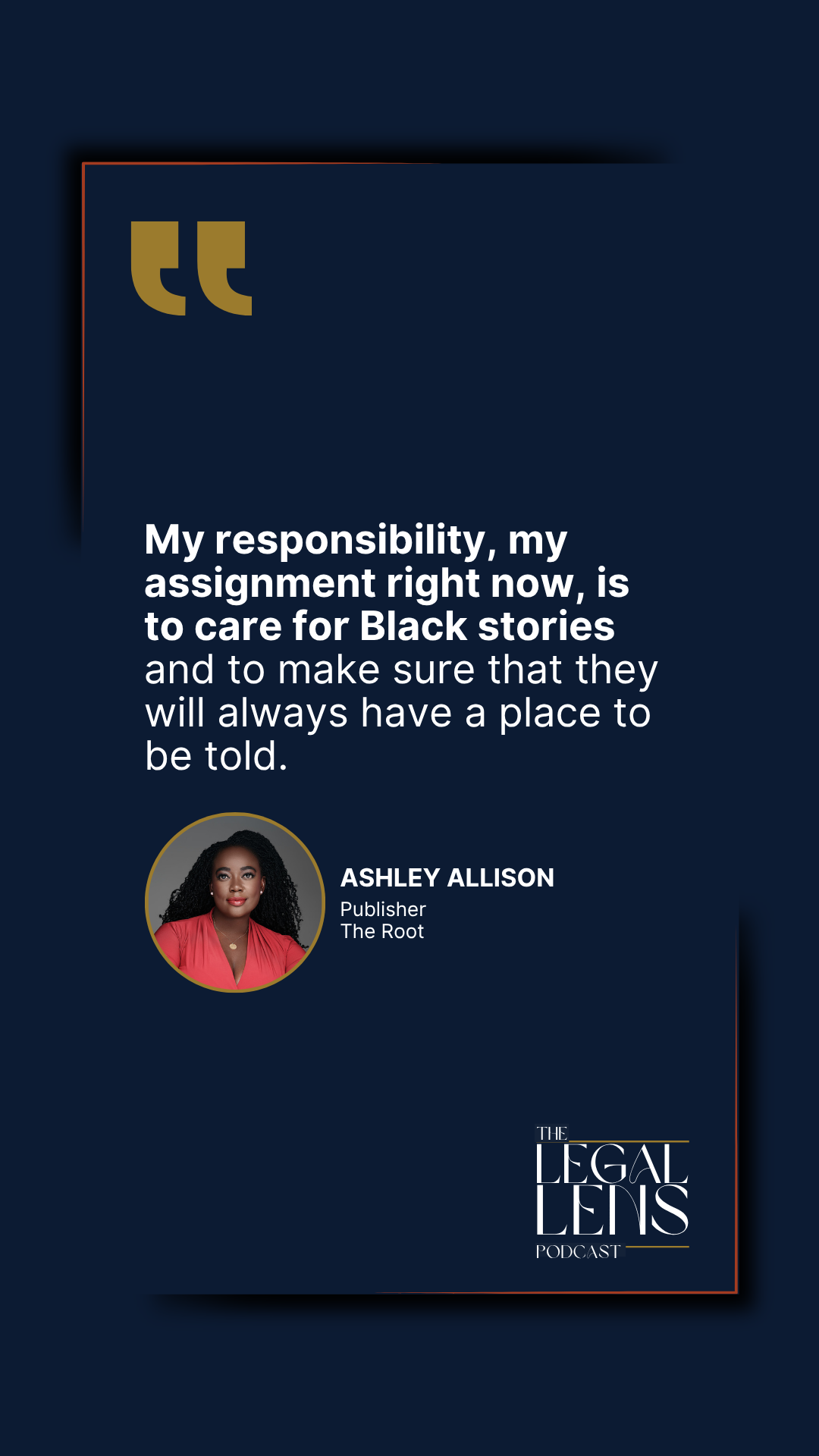
Addressing the methods her team uses to gather news, Ashley Allison drew a historical parallel between her modern media strategy and the operations of historical civil rights figures. She noted how Dr. Martin Luther King Jr. utilized WERD, the first Black-owned radio station in Atlanta, to broadcast messages directly to the community. Observers frequently note that historical frameworks of grassroots communication continue to influence modern digital platforms.
“It reminded me of when Dr. King’s office was underneath WERD, the Black radio station… We are telling the stories. We are aiming to be the WERD of our time on social media,” Allison shares.
Her perspective underscores how certain media models aim to serve as direct informational tools for civic engagement. By examining these historical parallels, it becomes clear how some platforms view the ongoing presence of Black voices in journalism as a continuation of long-standing oral and organizational traditions.
Related Article: Kellie Todd Griffin & The California Black Women’s Collective: Advocating for Economic Empowerment & Mobility for Black Women
What is the Philosophy Behind Watering Hole Media?
When discussing the business structure supporting these media efforts, Ashley Allison detailed the foundational philosophy behind Watering Hole Media. The company operates by providing resources to independent creators and producing original scripted and unscripted content. By adopting a hybrid model, the organization seeks to distribute stories across various digital channels.
“It’s called Watering Hole ’cause it is supposed to be just that, a place where everyone can come and be nourished… whether we work with creators that have their own platform, and we give them access to resources,” says Allison.
From an organizational standpoint, this approach reflects a broader industry trend where traditional written reporting is blended with a video-first strategy. This method is designed to reach modern audiences where they already consume information, illustrating the practical mechanics of how Black voices in journalism are actively distributed today.
How Did the “All Roads Lead to the South” March Mobilize the Community?
The conversation later focused on specific civic events, such as the “All Roads Lead to the South” march in Montgomery. Ashley Allison described how the activation was organized as a direct response to recent judicial shifts, specifically the Supreme Court decision regarding redistricting in Louisiana. The intersection of media coverage and voting rights is a subject of frequent legal and public analysis.
“When the Callais decision came down… what that did was gut and rip away a generation of work… it is our generation, my generation’s responsibility to make sure that their work is not in vain,” states Allison.
Related Article: Dr. T. Anansi Wilson: Voting Rights at Stake – The Recent SCOTUS Decision in Louisiana v. Callais
How Are Creators Utilized for Modern News Dissemination?
To cover large-scale events like the Montgomery march, modern media entities often deploy decentralized teams. Ashley Allison notes that her organization sent twenty creators to the ground to cover the activation. This operational strategy utilizes individuals with diverse professional backgrounds (ranging from formal journalists to lawyers and comedians) to document events in real time.
“We had our creators on the ground who were doing live storytelling. We had our senior producers and reporters who were interviewing people… it is a hybrid model that we take on,” Allison explains.
This approach to independent journalism highlights a shift in how news is captured. Rather than relying solely on centralized corporate desks, these platforms empower individuals with mobile devices to bypass traditional barriers, raising interesting questions about the future definitions and legal classifications of working journalists.
Why Does Jasmine Browley Advocate for Preserving Culturally Fluent Media?
In the second half of the podcast, Jasmine Browley joined the discussion to analyze the specific value that diverse representation brings to newsrooms. She argues that reporters who share the lived experiences of their subjects provide necessary context that is sometimes overlooked by mainstream outlets. Her professional stance highlights the role that cultural fluency plays in accurate reporting.
“It’s incredibly important to preserve Black voices in journalism and media for a myriad of reasons… preserving and platforming cultural fluency. There’s a certain texture and specific understanding that Black groups… comfortably navigate through,” Browley notes.
When discussing the mechanisms of public accountability, she provided an example from Alabama where she noted that local press allegedly bypassed a severe crime until independent reporters brought it to light. According to her perspective, ensuring Black voices in journalism are present in editorial meetings is a mechanism to elevate critical community stories to the national stage.
How is the Operational Transition to Independent Platforms Occurring?
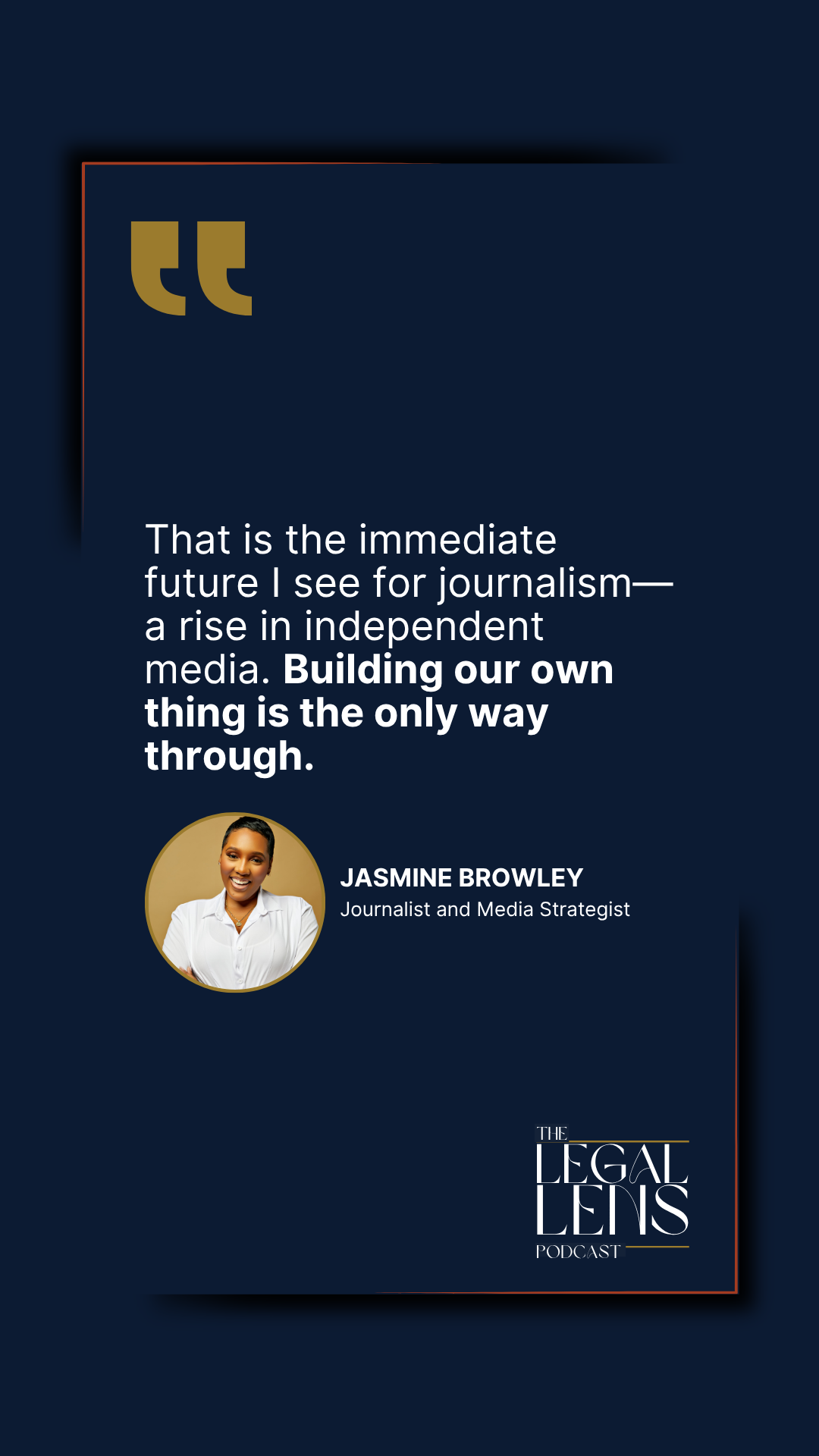
Expanding on her introductory remarks, Jasmine Browley detailed the strategic shift many reporters are making toward digital entrepreneurship. As legacy publications downsize to appease shareholders, seasoned reporters are increasingly pivoting to YouTube and TikTok to continue their work. This massive disruption in the workforce is reshaping the landscape of independent journalism.
“We’re seeing that so many Black journalists have been literally pushed out of newsrooms… Black media outlets that once thrived just two years ago are now downsizing significantly. And the only way is, you know, to build your own platform,” says Browley.
What is the Impact of the Louisiana v. Callais Decision on Voting Rights?
Returning to the topic of legal and political shifts, Jasmine Browley shared her perspective on how recent judicial rulings are covered by the press. Journalists act as the primary conduit for exposing legislative actions and redistricting efforts that impact the electorate. She described her reaction to the Louisiana v. Callais decision and its implications for electoral maps.
“Particularly the Louisiana versus Coley case wipes away districts that provide Black voices… an equal opportunity to participate in the political process and to elect candidates of their choice,” warns Browley.
From a media analysis standpoint, tracking these developments requires sustained, on-the-ground reporting. She emphasized that one of the vital roles of Black voices in journalism is to translate highly complex judicial rulings regarding voting rights into accessible language so that everyday citizens can understand how these laws affect their representation.
How Are Journalists Confronting the Complexities of Media Illiteracy?
The episode concluded with a discussion on the growing public concern surrounding how information is consumed online. Jasmine Browley pointed out that while consumers process unprecedented amounts of data, many lack the critical frameworks necessary to evaluate it objectively. This dynamic is frequently described by media analysts as media illiteracy.
“We’re living in a moment where people consume more information than ever, but they don’t have the context for evaluating it… audiences increasingly struggle to distinguish between reporting versus opinion,” cautions Browley.
The proliferation of unverified sponsored content, bots, and algorithmically amplified misinformation presents unique challenges, particularly during election cycles. Addressing media illiteracy requires audiences to actively develop their critical thinking skills while reporters commit to transparency regarding their sources.
Want to Hear More from Experts Like Ashley Allison and Jasmine Browley? Subscribe to the Legal Lens Podcast Today!
I have dedicated my career to helping litigants resolve their legal disputes through the mediation and dispute resolution process, and by helping dissect the legal issues that shape our public discourse and workplace dynamics, whether it be as a radio and podcast show host, or as a legal analyst in the news. My mission as the host of the Legal Lens radio show and podcast is to empower you with objective, expert-driven insights born from years of practice at the intersection of law and society.
Download and subscribe to the Legal Lens podcast today to hear more insights from leading experts like Ashley Allison and Jasmine Browley.
To download and listen to the show with Ashley and Jasmine on Apple or Spotify, click below:


To learn about all things Legal Lens, follow me on Instagram @iamangelareddockwright.
Follow Ashley Allison and The Root on their social platforms at @TheRoot, and follow Jasmine Browley across all platforms at @JasmineBrowley.
Angela’s Other Work
Learn more about my book – The Workplace Transformed: 7 Crucial Lessons from the Global Pandemic – here.
Learn more about my work as an employment and Title IX mediator at Angela J. Reddock-Wright | Signature Resolution and on LinkedIn @Angela J. Reddock-Wright, Esq., AWI-CH.
Book Angela
For media or booking inquiries, please reach out to danny@kwsmdigital.com.
This communication is not legal advice. It is educational only. For legal advice, consult with an experienced employment or civil rights law attorney in your state or city.